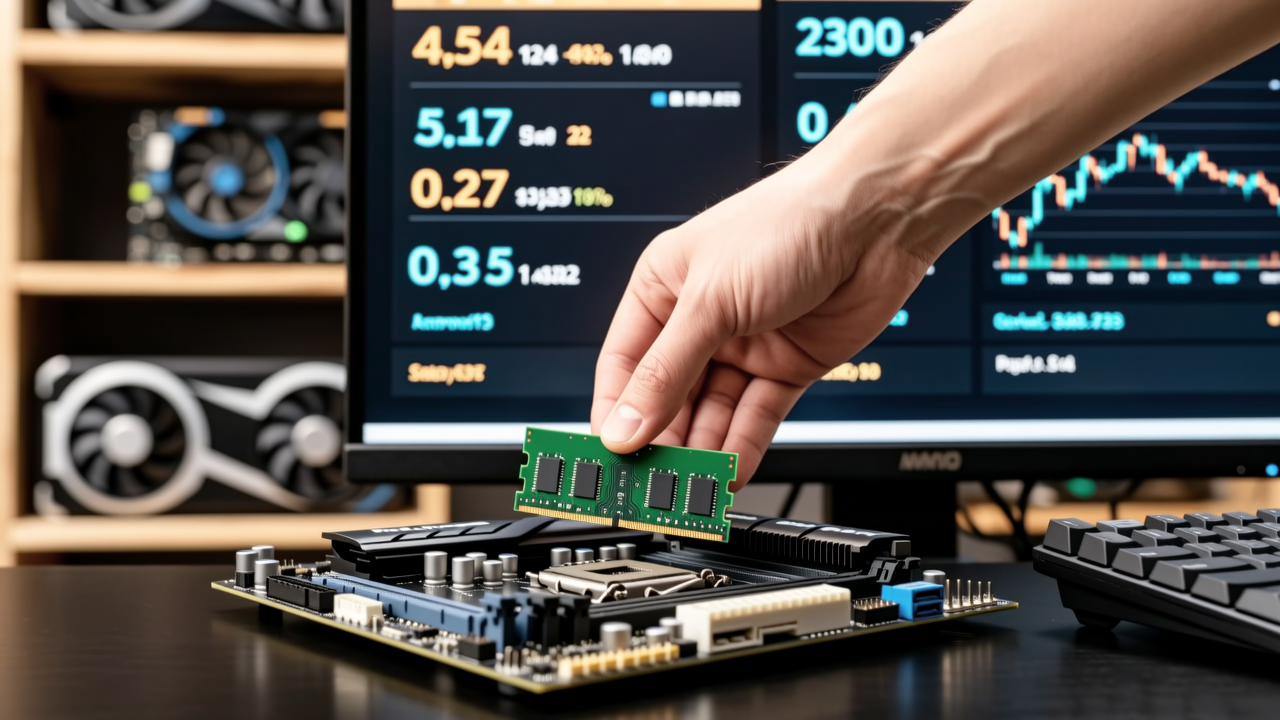
For those planning to upgrade their computers or build a new PC, the news about rising RAM prices may make their money feel lighter. Since early 2024, the prices of DDR4 and DDR5 modules have been steadily increasing, with some models recording rises of up to 20% over six months. What is actually happening, and more importantly, will this trend continue?
What's Actually Happening?
The global RAM market is experiencing pressure from various angles. According to a report from market analysis firm TrendForce, contract prices for DRAM (Dynamic Random Access Memory) increased between 13% and 18% in the first quarter of 2024 compared to the previous quarter. This increase involves both types of RAM used in desktops and servers, as well as mobile memory for smartphones.
This price increase is not a new phenomenon. In fact, the semiconductor industry often goes through cycles—prices fall when there is an oversupply, and they rise again when demand exceeds production capacity. However, this time, there is a unique combination of factors driving a sharper increase.
Why Are RAM Prices Rising?
Analysts have identified three main causes.
First, the growth in AI demand. The explosion of artificial intelligence (AI) has driven the need for high-capacity memory for data centers. AI chips like NVIDIA's H100 require high-speed, multi-layered (HBM) DRAM that uses the same fabrication capacity as conventional RAM. Manufacturers such as Samsung, SK Hynix, and Micron are now shifting most of their capacity to produce HBM, reducing supply for DDR4 and DDR5 modules.
Second, supply control by manufacturers. After a long period of falling prices in 2022–2023, major manufacturers have reduced capital investments and cut output to restore profit margins. This move has successfully raised prices, but it has also caused tighter supply.
Third, rising raw material and logistics costs. The prices of silicon wafers, substrates, and other components have also increased due to global inflation and ongoing supply chain disruptions following the pandemic.
What's the Impact on Users?
For regular users, the most noticeable impact is on the cost of building a PC or upgrading. For example, a DDR5 32GB kit (2x16GB) that cost around RM350 at the start of 2023 can now reach RM500 or more. This adds to the burden for those wanting to build a gaming system or workstation.
Smartphones and laptops are also affected, although the impact is less noticeable because manufacturers tend to absorb some costs to maintain retail prices. However, users may see gradual price increases in new models, or a reduction in RAM specifications at the same price point.
Will Prices Continue to Rise?
Most analysts expect prices to continue rising at least until the third quarter of 2024. TrendForce predicts another 3-8% increase in DRAM prices in the second quarter. However, there is a possibility that prices will stabilize towards the end of the year as manufacturers increase HBM production capacity and holiday season demand begins to subside.
However, long-term factors such as the increased use of AI across various sectors may keep pressure on supply. This means prices may not return to the lowest levels seen in 2023.
What Can We Do?
For users who need RAM immediately, the best time to buy may be now before prices rise further. If not urgent, waiting until the end of 2024 may be a wise choice when prices are expected to level off.
Alternative options include buying used RAM or considering DDR4, which has more stable prices than DDR5, even though it offers lower performance. For PC builders, planning a budget while taking into account price increases is an important step.
Conclusion
The rise in RAM prices reflects the increasingly complex dynamics of the semiconductor industry, driven by AI demand and manufacturer business strategies. Although it puts pressure on users, understanding the causes and price trends can help make smarter purchasing decisions. For now, the upward trend continues, so be prepared to spend more if you need new RAM.