Origem Acidental: O Buraco que Nunca foi Fechado
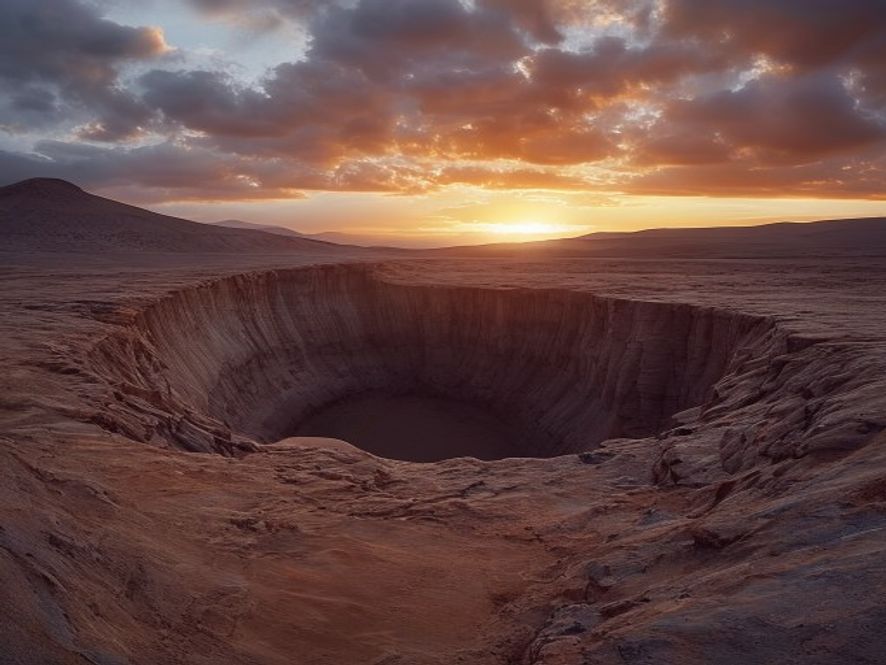
Em 1971, uma equipe de geólogos soviéticos estava realizando perfurações de exploração no deserto de Karakum quando a estrutura do solo sob a plataforma de perfuração desmoronou repentinamente. O resultado: um buraco com 70 metros de diâmetro e cerca de 30 metros de profundidade. Essa fenda liberou grandes quantidades de metano — um gás incolor, inodoro, mas altamente inflamável e tóxico em concentrações elevadas. Para evitar riscos aos moradores e animais nas áreas próximas, as autoridades soviéticas decidiram queimar o gás. Eles esperavam que o fogo se apagasse em alguns dias. Na realidade, o fogo ainda está acesa até hoje — mais de 53 anos depois. O nome 'Porta do Inferno' surgiu naturalmente da comunidade local, refletindo a impressão visual e psicológica do buraco em chamas que nunca se apaga no meio do deserto solitário.
O que Mantém o Fogo Aceso?
O cráter de Darvaza não é um vulcão ativo. É um buraco de gás natural que está queimando abertamente — resultado da reação entre o metano (CH₄) das camadas rochosas subterrâneas e o oxigênio atmosférico. A fonte principal desse gás é um reservatório original preso nas formações geológicas antigas abaixo do deserto. Segundo dados do Ministério de Energia do Turquemenistão, a pressão do gás abaixo do buraco ainda é estável, com estimativas diárias de liberação de aproximadamente 10 milhões de pés cúbicos (cerca de 283.000 metros cúbicos). Em 2010, satélites da NASA registraram temperaturas na superfície do fundo do buraco acima de 1.000°C — suficientemente quente para fundir sílica. No entanto, a temperatura real na zona de combustão não é conhecida com certeza, pois o acesso direto é impossível. Esse fenômeno fornece dados importantes sobre a taxa de liberação espontânea de metano da crosta terrestre — um fator crítico nos modelos globais de mudanças climáticas.
Atração e Advertência: Entre o Ecoturismo e os Riscos Ambientais
Darvaza agora é um destino turístico nicho cada vez mais conhecido. Aldeias pequenas próximas, que antes quase não tinham população, agora suportam tendas para turistas e guias locais. A noite à beira do buraco — com a luz laranja refletindo nas paredes de areia — é frequentemente descrita como uma experiência "surreal" e "empolgante". No entanto, nem todos os efeitos são positivos. Relatórios de saúde pública locais mostram um aumento de casos leves de distúrbios respiratórios dentro de 10 km, embora nenhuma pesquisa epidemiológica formal tenha ligado diretamente esses casos ao próprio buraco. Em 2018, o governo do Turquemenistão declarou a área como Parque Natural Darvaza — um movimento mais orientado para promover o turismo do que para proteger a ecologia. Propostas técnicas para fechar o buraco — como injeção de cimento ou redirecionamento de tubulações de gás — já foram discutidas, mas adiadas por considerações de custo, incerteza técnica e potencial risco de explosão caso a pressão do gás se acumule repentinamente.
O que Ensina o Fogo que Não Se Apaga?
Darvaza não é apenas uma anomalia geológica. É um exemplo claro de como ações práticas baseadas no entendimento científico da época podem gerar impactos de longo prazo que ultrapassam as expectativas. A decisão de queimar o gás em 1971 foi tomada com boas intenções: evitar poluição do ar e ameaças à segurança. No entanto, também revelou os limites do conhecimento humano sobre a dinâmica dos sistemas terrestres — especialmente a velocidade e a escala dos processos geoquímicos subterrâneos. Para cientistas, esse buraco se tornou uma estação de monitoramento natural para estudar o comportamento do metano na atmosfera, interações entre gases e rochas e sinais iniciais de atividade tectônica sutil. Para formuladores de políticas, ele levanta questões éticas: deveria um fenômeno que surgiu de um erro humano ser mantido como um monumento geológico — ou apagado por responsabilidade climática?
O Futuro Incerto
Nenhuma previsão científica confiável indica quando o fogo de Darvaza vai se apagar. Algumas medições recentes mostram uma leve redução na pressão do gás ao redor do buraco, mas o fluxo ainda é forte o suficiente para manter uma chama estável. O governo do Turquemenistão continua desenvolvendo infraestrutura turística na região, incluindo novas estradas e centros de informação. Enquanto isso, estudos contínuos usando espectrômetros de ar e sensores de longa distância monitoram a composição do gás e as flutuações de temperatura. Se o fogo realmente se apagar algum dia, talvez não seja devido à intervenção humana — mas porque o suprimento de gás no reservatório local se esgotar. Até que esse momento chegue, Darvaza permanece como um símbolo de duas realidades ao mesmo tempo: a força incontrolável da energia terrestre e a fragilidade das criações humanas para dominá-la.
Referências e Leitura Adicional
- 'The Door to Hell: Turkmenistan's Darvaza Gas Crater' — BBC Travel, 2014.
- 'Turkmenistan’s ‘Door to Hell’ is a burning gas crater that still mystifies scientists' — National Geographic, 2019.
- 'Darvaza gas crater: How did it form and how long will it burn?' — Geology.com, 2021.
Lubang Darvaza: O Fogo Eterno no Deserto de Karakum que Queima desde 1971. No meio do deserto de Karakum, no Turquemenistão, o cráter de gás Darvaza com 70 metros de largura continua a queimar desde um incêndio intencional em 1971 — resultado de uma falha na perfuração soviética. Este fenômeno não é apenas uma atração turística, mas também um laboratório ge químico aberto para estudos de metano, emissões climáticas e resiliência dos sistemas terrestres às perturbações humanas.. Origem Acidental: O Buraco que Nunca foi Fechado
Em 1971, uma equipe de geólogos soviéticos estava realizando perfurações de exploração no deserto de Karakum quando a estrutura do solo sob a plataforma de perfuração desmoronou repentinamente. O resultado: um buraco com 70 metros de diâmetro e cerca de 30 metros de profundidade. Essa fenda liberou grandes quantidades de metano — um gás incolor, inodoro, mas altamente inflamável e tóxico em concentrações elevadas. Para evitar riscos aos moradores e animais nas áreas próximas, as autoridades soviéticas decidiram queimar o gás. Eles esperavam que o fogo se apagasse em alguns dias. Na realidade, o fogo ainda está acesa até hoje — mais de 53 anos depois. O nome 'Porta do Inferno' surgiu naturalmente da comunidade local, refletindo a impressão visual e psicológica do buraco em chamas que nunca se apaga no meio do deserto solitário.
O que Mantém o Fogo Aceso?
O cráter de Darvaza não é um vulcão ativo. É um buraco de gás natural que está queimando abertamente — resultado da reação entre o metano CH₄ das camadas rochosas subterrâneas e o oxigênio atmosférico. A fonte principal desse gás é um reservatório original preso nas formações geológicas antigas abaixo do deserto. Segundo dados do Ministério de Energia do Turquemenistão, a pressão do gás abaixo do buraco ainda é estável, com estimativas diárias de liberação de aproximadamente 10 milhões de pés cúbicos cerca de 283.000 metros cúbicos . Em 2010, satélites da NASA registraram temperaturas na superfície do fundo do buraco acima de 1.000°C — suficientemente quente para fundir sílica. No entanto, a temperatura real na zona de combustão não é conhecida com certeza, pois o acesso direto é impossível. Esse fenômeno fornece dados importantes sobre a taxa de liberação espontânea de metano da crosta terrestre — um fator crítico nos modelos globais de mudanças climáticas.
Atração e Advertência: Entre o Ecoturismo e os Riscos Ambientais
Darvaza agora é um destino turístico nicho cada vez mais conhecido. Aldeias pequenas próximas, que antes quase não tinham população, agora suportam tendas para turistas e guias locais. A noite à beira do buraco — com a luz laranja refletindo nas paredes de areia — é frequentemente descrita como uma experiência "surreal" e "empolgante". No entanto, nem todos os efeitos são positivos. Relatórios de saúde pública locais mostram um aumento de casos leves de distúrbios respiratórios dentro de 10 km, embora nenhuma pesquisa epidemiológica formal tenha ligado diretamente esses casos ao próprio buraco. Em 2018, o governo do Turquemenistão declarou a área como Parque Natural Darvaza — um movimento mais orientado para promover o turismo do que para proteger a ecologia. Propostas técnicas para fechar o buraco — como injeção de cimento ou redirecionamento de tubulações de gás — já foram discutidas, mas adiadas por considerações de custo, incerteza técnica e potencial risco de explosão caso a pressão do gás se acumule repentinamente.
O que Ensina o Fogo que Não Se Apaga?
Darvaza não é apenas uma anomalia geológica. É um exemplo claro de como ações práticas baseadas no entendimento científico da época podem gerar impactos de longo prazo que ultrapassam as expectativas. A decisão de queimar o gás em 1971 foi tomada com boas intenções: evitar poluição do ar e ameaças à segurança. No entanto, também revelou os limites do conhecimento humano sobre a dinâmica dos sistemas terrestres — especialmente a velocidade e a escala dos processos geoquímicos subterrâneos. Para cientistas, esse buraco se tornou uma estação de monitoramento natural para estudar o comportamento do metano na atmosfera, interações entre gases e rochas e sinais iniciais de atividade tectônica sutil. Para formuladores de políticas, ele levanta questões éticas: deveria um fenômeno que surgiu de um erro humano ser mantido como um monumento geológico — ou apagado por responsabilidade climática?
O Futuro Incerto
Nenhuma previsão científica confiável indica quando o fogo de Darvaza vai se apagar. Algumas medições recentes mostram uma leve redução na pressão do gás ao redor do buraco, mas o fluxo ainda é forte o suficiente para manter uma chama estável. O governo do Turquemenistão continua desenvolvendo infraestrutura turística na região, incluindo novas estradas e centros de informação. Enquanto isso, estudos contínuos usando espectrômetros de ar e sensores de longa distância monitoram a composição do gás e as flutuações de temperatura. Se o fogo realmente se apagar algum dia, talvez não seja devido à intervenção humana — mas porque o suprimento de gás no reservatório local se esgotar. Até que esse momento chegue, Darvaza permanece como um símbolo de duas realidades ao mesmo tempo: a força incontrolável da energia terrestre e a fragilidade das criações humanas para dominá-la.
Referências e Leitura Adicional
- 'The Door to Hell: Turkmenistan's Darvaza Gas Crater' — BBC Travel, 2014.
- 'Turkmenistan’s ‘Door to Hell’ is a burning gas crater that still mystifies scientists' — National Geographic, 2019.
- 'Darvaza gas crater: How did it form and how long will it burn?' — Geology.com, 2021.