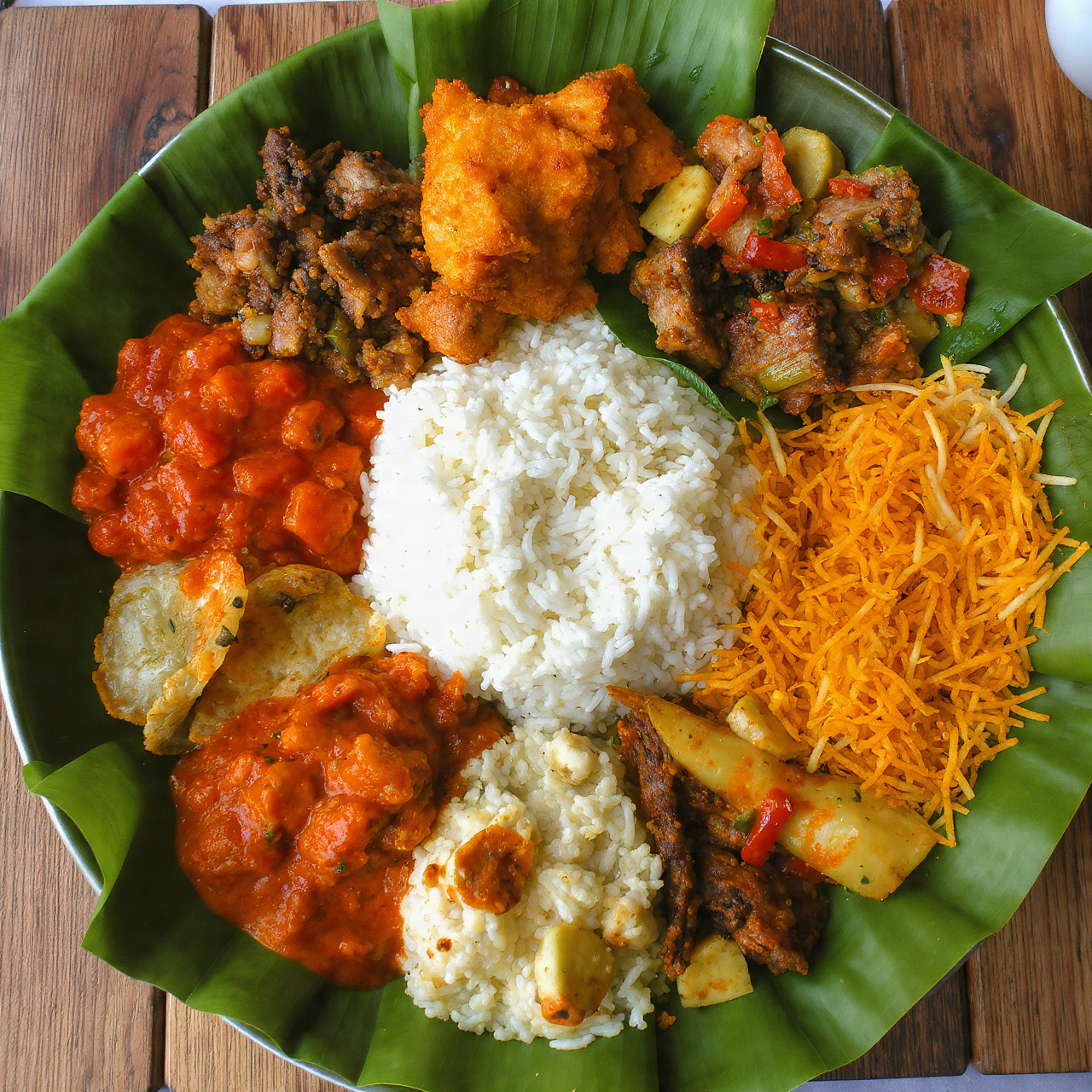
In a corner of a weekend farmers' market, 68-year-old Mak Cik Kamsiah skillfully scoops hot white rice onto banana leaves, followed by tender slices of soy sauce chicken, fried tempeh sambal, fried noodles, urap vegetables, and coconut fritters. This is not just any meal; it is nasi ambang, a heritage dish symbolizing flavor richness and togetherness, yet increasingly difficult to find, especially on the tables of the younger generation.
Mak Cik Kamsiah, who has been selling nasi ambang since the 1980s, laments the changes in taste and the challenges of maintaining this complex dish. "Back then, a plate of nasi ambang was shared among three or four people. Now, everyone wants fast food," she said, her eyes gazing into the distance, as if reminiscing about the golden days of this dish.
History and Essence of the Community Dish
Nasi ambang is not just an ordinary dish. It is a cultural manifestation and a philosophy of life of the Javanese community that migrated to Malay land, particularly in Johor and Selangor. Known as 'sega ambeng' in Java, this dish is traditionally served in a large tray where several people sit in a circle and eat together. This concept symbolizes unity, sharing, and the spirit of mutual cooperation.
Its diverse and flavorful components require attention and a long preparation time. White rice as the main component is accompanied by dishes such as soy sauce chicken or spiced fried chicken, fried sambal (a mix of tempeh, tofu, vermicelli, and green beans), fried noodles, coconut fritters, and urap (a mix of boiled vegetables with seasoned shredded coconut). Each element brings its own taste and texture, creating a harmonious symphony of flavors. The preparation process often involves several family members, making it an activity that strengthens family bonds.
Threats from the Modern Era: Between Taste and Operational Costs
The decline in popularity of nasi ambang can be linked to several main factors. A fast-paced modern lifestyle has changed the eating habits of the community. The younger generation tends to prefer easily available, quickly prepared food that fits their individual lifestyles. Dishes like nasi ambang, which require time to enjoy and are often associated with group meals, are seen as less practical.
From an economic perspective, the cost of preparing nasi ambang is high. The large amount of raw materials and the variety of side dishes require significant capital. In addition, the labor and time needed to cook each component separately also contribute to high operational costs. This makes the selling price possibly less competitive compared to simpler dishes.
"The profit margin for nasi ambang is not as high as other foods. We make it more out of passion and to preserve our heritage," shared Puan Zaiton, a small catering business owner in Batu Pahat who also offers nasi ambang on her menu. She admitted the challenges of finding skilled helpers willing to spend time on traditional preparation, as many now prefer easier and faster food options.
A Moment of Revival or Extinction?
Despite the challenges, there are still efforts to ensure that nasi ambang does not fade away with time. Some modern restaurants and cafes have started reintroducing nasi ambang with contemporary touches, either by serving it individually on plates or adding extra side dishes to attract new customers. Initiatives by some cultural associations are also actively promoting this dish through food festivals and cooking workshops.
However, food culture observers argue that for nasi ambang to remain relevant, it needs to be adapted without sacrificing its original essence. "It is important to preserve the values of togetherness and sharing inherent in nasi ambang. This is not just food, but a symbol of social relationships," said Dr. Azman Harun, a lecturer in food studies at a local university, who also emphasized the importance of educating the younger generation about their culinary heritage.
Preserving Heritage Amidst Change
The future of nasi ambang depends on the balance between tradition and innovation. Without proactive efforts from entrepreneurs, communities, and the government, this dish may remain a sweet memory for previous generations only. It is not just about preserving the recipe, but also maintaining the community spirit and values of sharing embedded in every bite.
Nasi ambang is more than just a dish; it is a story, tradition, and heritage that needs to be continued. In this modern era, where the values of togetherness are increasingly eroded, perhaps nasi ambang can serve as a reminder that unites us again, one tray at a time.
---
*Reference: [Di Ambang Kasih — Wikipedia](https://ms.wikipedia.org/wiki/Di_Ambang_Kasih)*