Early Days: A Paradox of Efficiency
Imagine a car that can travel 100 kilometers on just one liter of diesel. That is the Volkswagen XL1 — a vehicle that broke the fuel efficiency record but was never intended for mass-market appeal. More than ten years after its launch, the model is not only not outdated, but has become a collector's dream. Its used price still approaches the new price. What makes the XL1 so unique? And why is it still relevant in an era of rapid electrification?
Unbroken Fuel Efficiency Record
The XL1 uses a 0.8-liter two-cylinder diesel engine producing 35 hp, combined with a 27 hp electric motor. A total of 48 hp is indeed low — but its dry weight is only 795 kg, and its drag coefficient of 0.189 is among the lowest in automotive history. Its official fuel consumption of 0.9 L/100 km (261 mpg) remains unchallenged by any commercial vehicle to date.
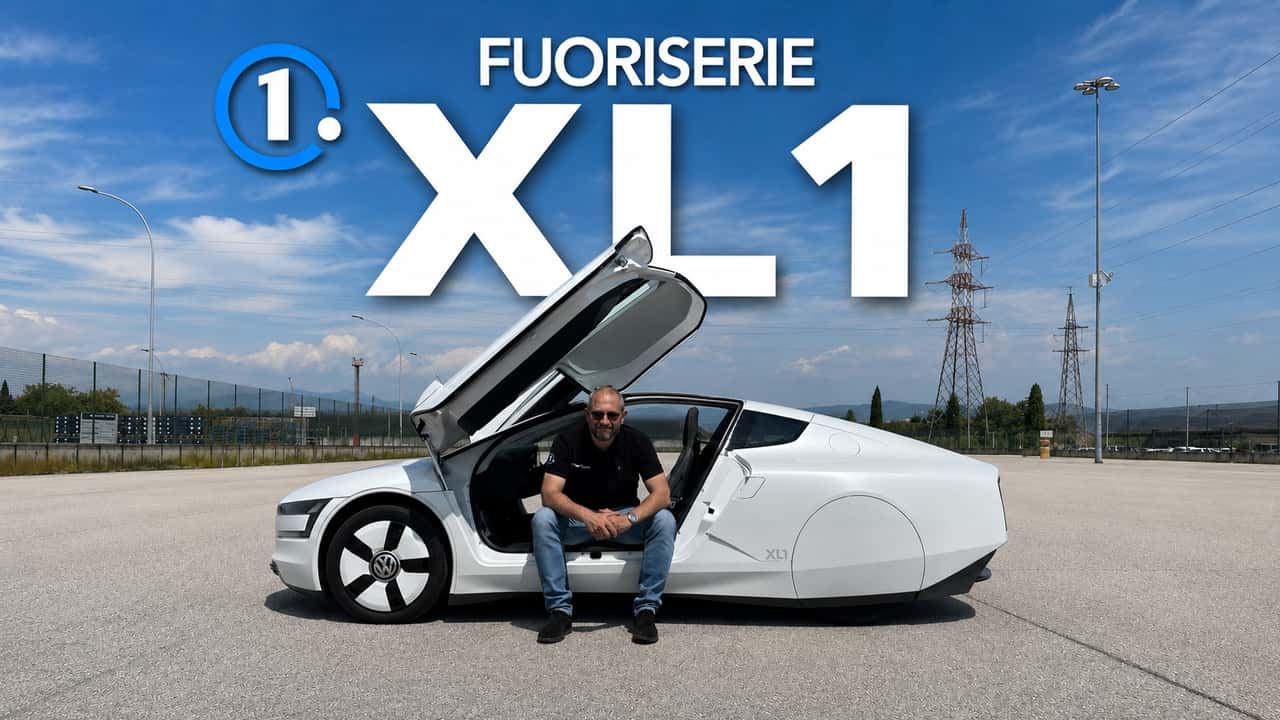
It is also a plug-in hybrid with an electric range of approximately 50 km — enough for most daily commutes without ever starting the diesel engine. Its construction uses carbon fiber and a lightweight monocoque frame, making it one of the most advanced in terms of materials at its time. The gullwing doors and extreme aerodynamic shape are not just for visual effect: every curve is designed to minimize drag. There are only two seats — a deliberate compromise for weight savings.
Why Only 200 Units?
Volkswagen only produced 200 units of the XL1, sold at around €111,000 (approximately RM560,000 at current exchange rates). The number was limited not due to lack of demand, but because of the extremely high production costs: each unit was almost built manually with premium materials. The company did not aim for profit — the XL1 was a 'mobile laboratory' to test the limits of hybrid technology and extreme efficiency. It was a statement: fuel efficiency can be achieved without sacrificing performance or driving pleasure.
Today, used units still sell for €100,000 to €120,000. Its value has not depreciated due to scarcity and its status as an engineering artifact. Although several prototypes and concept versions were displayed, the actual production version remains the most desired.
Significance for the Nusantara Market
For automotive enthusiasts in Malaysia, Indonesia, and other ASEAN countries, the XL1 offers an important lesson: extreme fuel efficiency is not a fantasy — it can be achieved with existing technology. However, its cost is high. In this region, where fuel subsidies still exist and hybrid vehicles like the Toyota Prius or Honda City Hybrid are becoming more common, the XL1 serves as an extreme reference. It proves the potential of small engines and lightweight hybrid systems to drastically reduce fuel consumption.
The main challenge in Nusantara is not just technical, but infrastructural: limited charging facilities, high temperatures, and uneven road conditions. The XL1 itself is not practical for daily use here. However, its engineering principles — weight reduction, optimal aerodynamics, and smart energy management — have already started appearing in commercial models such as the Volkswagen ID series and various current hybrid variants.
What Does It Mean for the Future?
The XL1 proves that high efficiency is not a myth. It can be realized — if there is the will and sufficient resources. It also serves as a reminder: the shift towards electric vehicles is not the only path forward. Efficient hybrids remain relevant, especially in countries with underdeveloped electrification infrastructure. However, the lack of continued production of the XL1 shows a market reality: consumers are not yet ready to pay a premium solely for efficiency.
As a collector's item, the XL1 is now valued like an engineering artwork. As a lesson, it reminds us that technological boundaries can always be pushed — and sometimes, the most efficient is not the most practical. In Nusantara, the true value of the XL1 may not lie in ownership, but in the inspiration it leaves for designers and drivers of future generations.
Volkswagen XL1: The Efficiency Record That Is Now a Collector's Dream. Volkswagen XL1 — the world's most fuel-efficient diesel hybrid with an official fuel consumption of 0.9 L/100 km — was released in limited numbers of 200 units in 2014. More than ten years later, its price remains high, reflecting its status as an engineering icon. This article explores the technical specifications, market context, and relevance for automotive enthusiasts in Malaysia, Indonesia, and the ASEAN region.. Early Days: A Paradox of Efficiency
Imagine a car that can travel 100 kilometers on just one liter of diesel. That is the Volkswagen XL1 — a vehicle that broke the fuel efficiency record but was never intended for mass-market appeal. More than ten years after its launch, the model is not only not outdated, but has become a collector's dream. Its used price still approaches the new price. What makes the XL1 so unique? And why is it still relevant in an era of rapid electrification?
Unbroken Fuel Efficiency Record
The XL1 uses a 0.8-liter two-cylinder diesel engine producing 35 hp, combined with a 27 hp electric motor. A total of 48 hp is indeed low — but its dry weight is only 795 kg, and its drag coefficient of 0.189 is among the lowest in automotive history. Its official fuel consumption of 0.9 L/100 km 261 mpg remains unchallenged by any commercial vehicle to date.
It is also a plug-in hybrid with an electric range of approximately 50 km — enough for most daily commutes without ever starting the diesel engine. Its construction uses carbon fiber and a lightweight monocoque frame, making it one of the most advanced in terms of materials at its time. The gullwing doors and extreme aerodynamic shape are not just for visual effect: every curve is designed to minimize drag. There are only two seats — a deliberate compromise for weight savings.
Why Only 200 Units?
Volkswagen only produced 200 units of the XL1, sold at around €111,000 approximately RM560,000 at current exchange rates . The number was limited not due to lack of demand, but because of the extremely high production costs: each unit was almost built manually with premium materials. The company did not aim for profit — the XL1 was a 'mobile laboratory' to test the limits of hybrid technology and extreme efficiency. It was a statement: fuel efficiency can be achieved without sacrificing performance or driving pleasure.
Today, used units still sell for €100,000 to €120,000. Its value has not depreciated due to scarcity and its status as an engineering artifact. Although several prototypes and concept versions were displayed, the actual production version remains the most desired.
Significance for the Nusantara Market
For automotive enthusiasts in Malaysia, Indonesia, and other ASEAN countries, the XL1 offers an important lesson: extreme fuel efficiency is not a fantasy — it can be achieved with existing technology. However, its cost is high. In this region, where fuel subsidies still exist and hybrid vehicles like the Toyota Prius or Honda City Hybrid are becoming more common, the XL1 serves as an extreme reference. It proves the potential of small engines and lightweight hybrid systems to drastically reduce fuel consumption.
The main challenge in Nusantara is not just technical, but infrastructural: limited charging facilities, high temperatures, and uneven road conditions. The XL1 itself is not practical for daily use here. However, its engineering principles — weight reduction, optimal aerodynamics, and smart energy management — have already started appearing in commercial models such as the Volkswagen ID series and various current hybrid variants.
What Does It Mean for the Future?
The XL1 proves that high efficiency is not a myth. It can be realized — if there is the will and sufficient resources. It also serves as a reminder: the shift towards electric vehicles is not the only path forward. Efficient hybrids remain relevant, especially in countries with underdeveloped electrification infrastructure. However, the lack of continued production of the XL1 shows a market reality: consumers are not yet ready to pay a premium solely for efficiency.
As a collector's item, the XL1 is now valued like an engineering artwork. As a lesson, it reminds us that technological boundaries can always be pushed — and sometimes, the most efficient is not the most practical. In Nusantara, the true value of the XL1 may not lie in ownership, but in the inspiration it leaves for designers and drivers of future generations.