Introduction
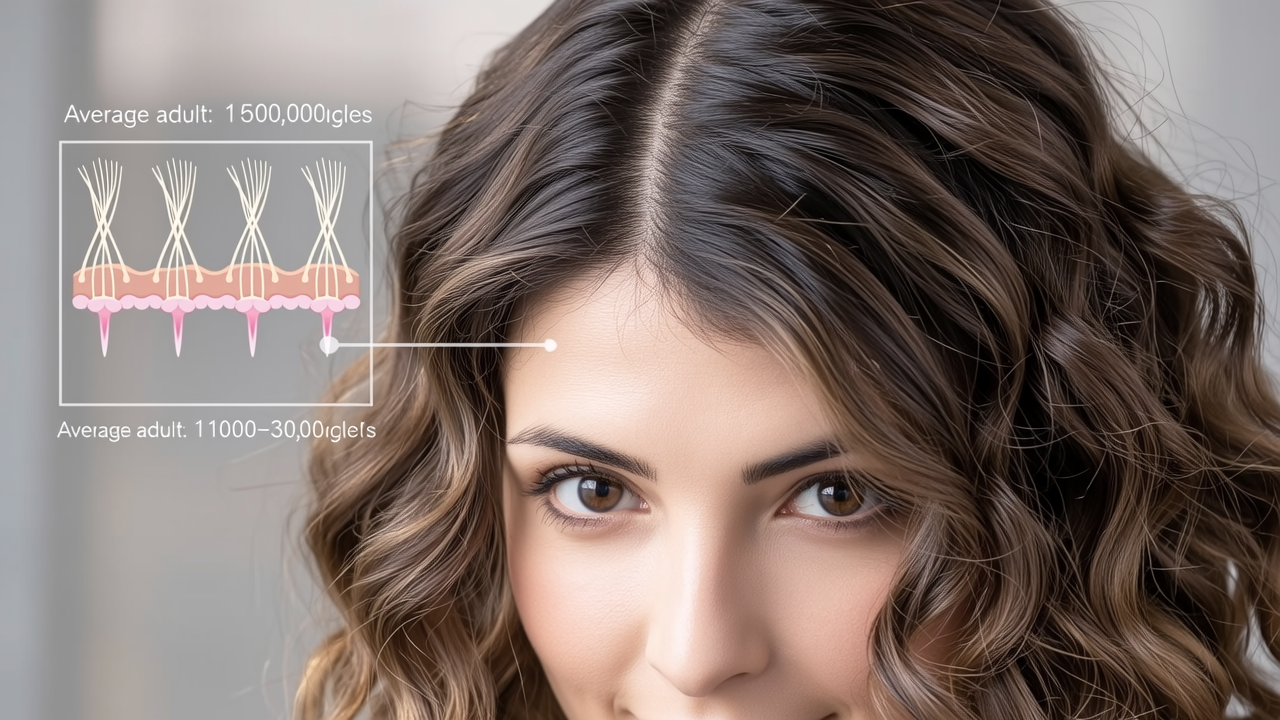
Have you ever wondered how many hairs grow on your head? You may have heard numbers like 100,000, but is that an absolute number? The answer is not that simple, as the number of hairs varies greatly between individuals. Let's explore five important facts about the number of hairs on an adult's head.
1. Average Range: 100,000 to 150,000 Hairs
On average, adults have between 100,000 and 150,000 hairs on their head. However, this number can vary depending on hair color. For example, people with brown hair usually have around 140,000 hairs, while those with black or dark brown hair have about 100,000 to 120,000 hairs. Red hair, on the other hand, is the least, with only about 80,000 to 90,000 hairs.
This difference occurs because hair thickness and pigmentation affect the number of active follicles. People with brown hair tend to have finer hair, so more strands are needed to cover the scalp. In contrast, black hair is thicker and denser, so there are fewer strands.
2. Genetic and Ethnic Factors Determine Hair Count
Genetics plays a significant role in determining the number of hairs a person has. For example, Asian populations tend to have thicker and denser hair, with counts ranging from 80,000 to 120,000 hairs. Meanwhile, Caucasian (white-skinned) populations may have fewer hairs but each strand is finer. Studies show that hair density is also influenced by ethnicity, where people from Africa have curlier hair and fewer hairs per square inch.
Genetic factors also determine hair loss patterns, such as male pattern baldness, which is influenced by the hormone dihydrotestosterone (DHT). So, if your father is bald, you might experience it too, but not necessarily because of the number of hairs, but because of the sensitivity of the follicles to DHT.
3. Losing 50 to 100 Hairs a Day Is Normal
Did you know that losing 50 to 100 hairs a day is normal? This is part of the hair growth cycle, which consists of the growth phase (anagen), transition phase (catagen), and resting phase (telogen). During the telogen phase, hair falls out and is replaced by new hair. Therefore, if you see hair in your brush or on the bathroom floor, don't panic – it's normal.
The average daily loss is about 80 hairs for men and 100 hairs for women. However, if you experience sudden excessive hair loss, it may be a sign of health issues such as nutritional deficiencies, stress, or hormonal imbalances. In such cases, it is advisable to consult a doctor.
4. Why Do Hairs Stop Growing?
Our hair does not grow forever; each follicle has its own cycle. The growth phase (anagen) lasts between 2 to 6 years, depending on genetics. After that, the hair enters the catagen phase (2-3 weeks) and finally the telogen phase (3-4 months) before falling out. The maximum length of hair is determined by the duration of the anagen phase. This is why hair on our heads rarely exceeds the waist, although some can grow longer due to genetic factors.
Baldness occurs when hair follicles shrink and produce shorter, finer hair, eventually stopping growth. This is usually caused by genetics and hormones, especially in men.
5. Other Interesting Facts
- Human hair is one of the fastest-growing tissues in the body, with an average growth rate of 1.25 cm per month (15 cm per year).
- Hair type (straight, curly, kinky) does not affect the number of strands, but it affects the perception of density. Curly hair appears denser due to its structural differences.
- External factors such as weather, diet, and hair care can affect hair health but do not change the number of active follicles.
Conclusion
So, how many hairs are on your head? On average, between 80,000 and 150,000 hairs, but remember that this number varies greatly between individuals. Definitely, each hair has its own life cycle, and daily hair loss is normal. If you want to maintain healthy hair, take care of your diet and avoid excessive stress. Now you know – even a few hairs are a treasure worth protecting!