🌍 Global coverage 24/7 • 🏯 East Asia: China, Japan, Korea • 🛕 South Asia: India • 🏰 Europe • 🗽 Americas • 🌍 Africa • 🕌 Middle East • 🇵🇸 Palestine Solidarity •
This article is a translation from the original language.
🕌 Stories & Lessons
Brilliant Victory at Qadisiyah: The Fall of the Sassanid Persian Empire
The Battle of al-Qadisiyyah in November 636 CE was a pivotal moment in the history of Islamic conquests in Persia. With brilliant strategy and high morale, the army of the Rashidun Caliphs successfully defeated the Sassanid Empire, which had ruled for centuries. This victory paved the way for the liberation of Mesopotamia and eventually led to the fall of the Persian capital, Ctesiphon.
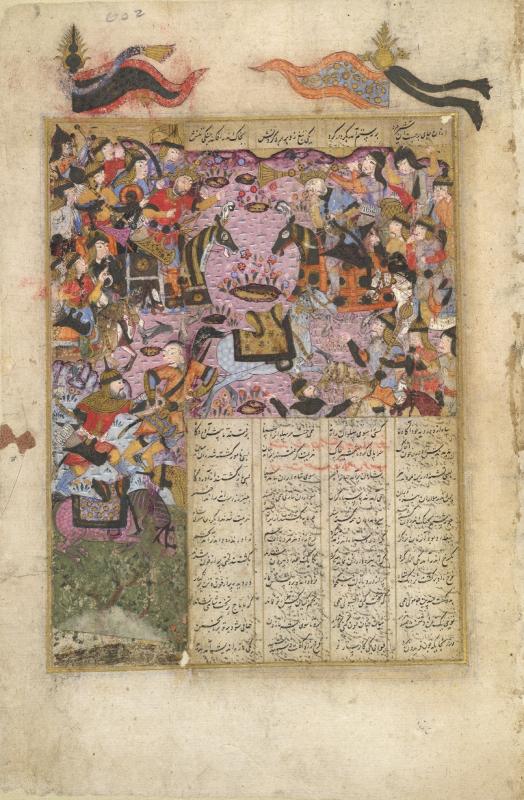
Image: Foto: Wikipedia — Battle of al-Qadisiyyah (CC BY-SA 4.0)
AI
Introduction
In the annals of world history, there are several battles that have changed the course of human civilization. One such battle is the Battle of al-Qadisiyyah, a battlefield where the strength of faith met the might of an empire. In November 636 CE, near the town of al-Qadisiyyah (now in Iraq), the army of the Rashidun Caliphs, led by Saad bin Abi Waqqas, faced the mighty Sassanid Persian Empire. For the Muslim world, this battle was not just a military victory but a symbol of the rise of a new civilization based on monotheism. This article will explore this historic event with a lively and inspiring narrative.
Background: The Rise of Islam and the Persian Challenge
After the death of the Prophet Muhammad (PBUH) in 632 CE, the Rashidun Caliphs, under the leadership of Abu Bakar al-Siddiq and later Umar al-Khattab, expanded the influence of Islam beyond the Arabian Peninsula. However, to the east, the Sassanid Empire, which had ruled since the 3rd century CE, remained a powerful force controlling Persia, Iraq, and parts of Central Asia. At that time, Persia was rich in culture, knowledge, and technology, but it was also plagued by internal conflicts and continuous wars with the Byzantine Empire. This weakness provided an opportunity for the Muslim army to attack, not solely for conquest, but to liberate society from the caste system and tyranny practiced by the Sassanid regime.
War Preparation: Strategy and Spirit
In 636 CE, Caliph Umar al-Khattab sent Saad bin Abi Waqqas, a renowned companion of the Prophet known for his wisdom and bravery, to lead an expedition towards the east. The Muslim army, numbering around 30,000, consisted of various Arab tribes, including the Bani Tamim, Bani Asad, and Bani Bakr. They were armed with swords, spears, and bows, but more importantly, they were filled with strong faith. Meanwhile, the Persian army, led by Rustam Farrokhzad, was larger, estimated between 60,000 and 100,000, equipped with war elephants, horse-drawn chariots, and full armor. However, their hearts were filled with doubt and fear of the changes brought by Islam.
The Course of the Battle: Three Days of Bravery
The Battle of al-Qadisiyyah began on 16 November 636 CE and lasted for three consecutive days. On the first day, the Persian army launched a fierce attack with war elephants that shook the Muslim lines. However, Saad bin Abi Waqqas, who was in the rear due to illness, gave wise instructions: destroy the elephants by cutting their saddle ropes and stabbing their eyes. This strategy worked, and the frightened elephants ran wild, disrupting the Persian lines themselves.
On the second day, a fierce battle took place in the middle of the desert. The Muslim army used fast guerrilla tactics, taking advantage of their mobility compared to the heavier Persian forces. Heroes like al-Qa'qa' bin Amr al-Tamimi and al-Muthanna bin Harithah emerged as determined leaders, inspiring other soldiers. On the third day, a sudden strong wind blew from the west, causing dust that blinded the Persian army. This was the turning point: the Muslim army launched a major attack, and Rustam was killed in the chaos. His death caused the Persian army to lose direction, and they fled in disarray.
The Impact of the Victory: The Fall of the Sassanid Empire
The victory at Qadisiyah opened the door to the conquest of Ctesiphon, the prosperous capital of Persia. In 637 CE, the Muslim army successfully captured the city with little resistance, as the Persian army had lost its morale. A large amount of plunder, including the famous carpet of King Khosrow II and a large library, became evidence of the greatness of the Persian civilization now under Islamic rule. However, more importantly, this victory enabled the spread of Islam throughout Persia and further into Central Asia. Within a few decades, the Arabic language and Islamic values began to blend with Persian culture, giving rise to a golden age of Islamic civilization, especially in the fields of science, philosophy, and literature.
Lessons and Examples
The Battle of al-Qadisiyyah teaches us that true strength lies not in numbers or equipment, but in faith, strategy, and unity. The smaller but united Muslim army managed to defeat a larger empire because they believed in a noble cause. Moreover, this battle also shows that change can come quickly when free souls fight for truth. For us today, the spirit of Qadisiyyah is a reminder that every challenge can be overcome with belief and cooperation.
Conclusion
Perhaps, without the Battle of al-Qadisiyyah, the map of the world might have been different. The 400-year-old Sassanid Empire fell within just a few days, replaced by a more inclusive and knowledgeable civilization. This event is not only important in Islamic history but also in world history. It reminds us that every fall leads to a rise, and every victory is a gift from the Almighty. Let us all appreciate this heritage and continue to learn from the great stories of our predecessors.
Brilliant Victory at Qadisiyah: The Fall of the Sassanid Persian Empire. The Battle of al-Qadisiyyah in November 636 CE was a pivotal moment in the history of Islamic conquests in Persia. With brilliant strategy and high morale, the army of the Rashidun Caliphs successfully defeated the Sassanid Empire, which had ruled for centuries. This victory paved the way for the liberation of Mesopotamia and eventually led to the fall of the Persian capital, Ctesiphon.. Introduction
In the annals of world history, there are several battles that have changed the course of human civilization. One such battle is the Battle of al-Qadisiyyah, a battlefield where the strength of faith met the might of an empire. In November 636 CE, near the town of al-Qadisiyyah now in Iraq , the army of the Rashidun Caliphs, led by Saad bin Abi Waqqas, faced the mighty Sassanid Persian Empire. For the Muslim world, this battle was not just a military victory but a symbol of the rise of a new civilization based on monotheism. This article will explore this historic event with a lively and inspiring narrative.
Background: The Rise of Islam and the Persian Challenge
After the death of the Prophet Muhammad PBUH in 632 CE, the Rashidun Caliphs, under the leadership of Abu Bakar al-Siddiq and later Umar al-Khattab, expanded the influence of Islam beyond the Arabian Peninsula. However, to the east, the Sassanid Empire, which had ruled since the 3rd century CE, remained a powerful force controlling Persia, Iraq, and parts of Central Asia. At that time, Persia was rich in culture, knowledge, and technology, but it was also plagued by internal conflicts and continuous wars with the Byzantine Empire. This weakness provided an opportunity for the Muslim army to attack, not solely for conquest, but to liberate society from the caste system and tyranny practiced by the Sassanid regime.
War Preparation: Strategy and Spirit
In 636 CE, Caliph Umar al-Khattab sent Saad bin Abi Waqqas, a renowned companion of the Prophet known for his wisdom and bravery, to lead an expedition towards the east. The Muslim army, numbering around 30,000, consisted of various Arab tribes, including the Bani Tamim, Bani Asad, and Bani Bakr. They were armed with swords, spears, and bows, but more importantly, they were filled with strong faith. Meanwhile, the Persian army, led by Rustam Farrokhzad, was larger, estimated between 60,000 and 100,000, equipped with war elephants, horse-drawn chariots, and full armor. However, their hearts were filled with doubt and fear of the changes brought by Islam.
The Course of the Battle: Three Days of Bravery
The Battle of al-Qadisiyyah began on 16 November 636 CE and lasted for three consecutive days. On the first day, the Persian army launched a fierce attack with war elephants that shook the Muslim lines. However, Saad bin Abi Waqqas, who was in the rear due to illness, gave wise instructions: destroy the elephants by cutting their saddle ropes and stabbing their eyes. This strategy worked, and the frightened elephants ran wild, disrupting the Persian lines themselves.
On the second day, a fierce battle took place in the middle of the desert. The Muslim army used fast guerrilla tactics, taking advantage of their mobility compared to the heavier Persian forces. Heroes like al-Qa'qa' bin Amr al-Tamimi and al-Muthanna bin Harithah emerged as determined leaders, inspiring other soldiers. On the third day, a sudden strong wind blew from the west, causing dust that blinded the Persian army. This was the turning point: the Muslim army launched a major attack, and Rustam was killed in the chaos. His death caused the Persian army to lose direction, and they fled in disarray.
The Impact of the Victory: The Fall of the Sassanid Empire
The victory at Qadisiyah opened the door to the conquest of Ctesiphon, the prosperous capital of Persia. In 637 CE, the Muslim army successfully captured the city with little resistance, as the Persian army had lost its morale. A large amount of plunder, including the famous carpet of King Khosrow II and a large library, became evidence of the greatness of the Persian civilization now under Islamic rule. However, more importantly, this victory enabled the spread of Islam throughout Persia and further into Central Asia. Within a few decades, the Arabic language and Islamic values began to blend with Persian culture, giving rise to a golden age of Islamic civilization, especially in the fields of science, philosophy, and literature.
Lessons and Examples
The Battle of al-Qadisiyyah teaches us that true strength lies not in numbers or equipment, but in faith, strategy, and unity. The smaller but united Muslim army managed to defeat a larger empire because they believed in a noble cause. Moreover, this battle also shows that change can come quickly when free souls fight for truth. For us today, the spirit of Qadisiyyah is a reminder that every challenge can be overcome with belief and cooperation.
Conclusion
Perhaps, without the Battle of al-Qadisiyyah, the map of the world might have been different. The 400-year-old Sassanid Empire fell within just a few days, replaced by a more inclusive and knowledgeable civilization. This event is not only important in Islamic history but also in world history. It reminds us that every fall leads to a rise, and every victory is a gift from the Almighty. Let us all appreciate this heritage and continue to learn from the great stories of our predecessors.
References:
- Wikipedia: "Battle of al-Qadisiyyah"
- Classical Islamic historical sources.
---
Reference: Battle of al-Qadisiyyah — Wikipedia https://en.wikipedia.org/wiki/Battle of al-Qadisiyyah