Introduction
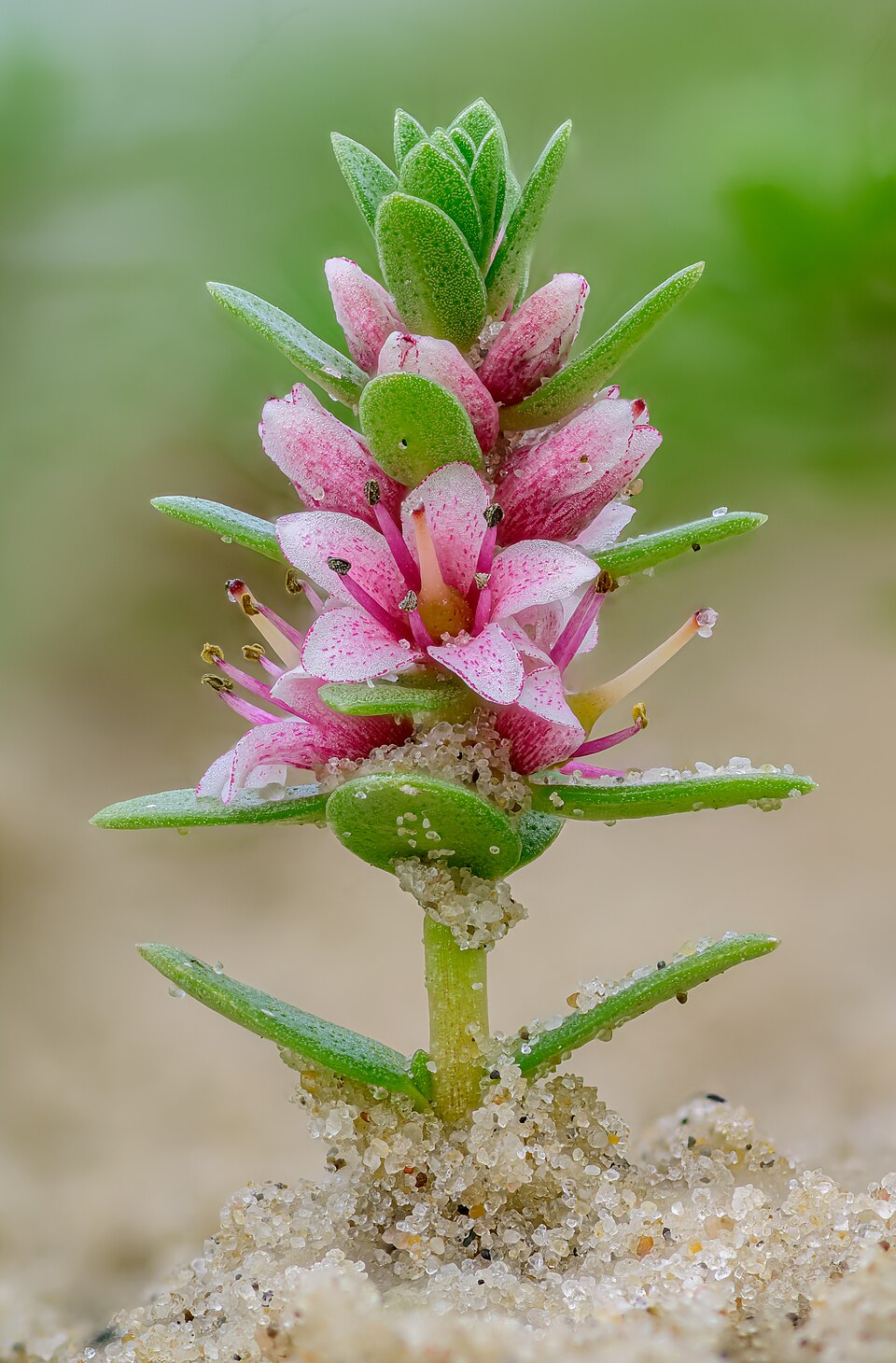
Lysimachia maritima, more commonly known as Sea Milkwort or sea milkwort, is a flowering plant from the Primulaceae family. This plant was once classified as the only species in the genus Glaux with the scientific name *Glaux maritima*, but modern DNA studies have moved it into the genus *Lysimachia*. This change reflects advancements in understanding evolutionary relationships within this plant family.
Taxonomy and Nomenclature
The scientific name *Lysimachia maritima* was introduced by Galasso, Banfi, and Soldano as a replacement for the old name *Glaux maritima* given by Carl Linnaeus. This plant has several common names in English, including sea milkwort, sea milkweed, and black saltwort. In local contexts, it is often referred to as 'sea milkwort' due to its morphological similarity to other species in the same genus.
Distribution and Habitat
This species has a circumpolar distribution in the northern hemisphere, that is, in Europe, Central Asia, and North America. In Europe, it grows mainly in coastal habitats such as salt marshes and seaside cliffs. However, in Asia and North America, it can also be found in moist inland habitats, including alkaline grasslands in desert areas of Utah, United States, at elevations up to 2,600 meters (8,500 feet). The ability to live in various conditions shows a wide ecological tolerance.
Morphological Characteristics
Lysimachia maritima has unique features that distinguish it from other genera in the Primulaceae, namely, petalless (apetalous) flowers with a calyx that resembles a petaloid (petal-like) pink or white corolla. This flower structure is typically pentamerous (based on five) both in the calyx and in the seed capsule. Its leaves are fleshy, simple, and arranged oppositely. This fleshy characteristic helps the plant withstand salty environments in coastal habitats by storing water and reducing moisture loss.
Conservation Status
According to the IUCN Red List, *Lysimachia maritima* is categorized as a species of Least Concern. This means that the population of this species remains stable throughout its range and does not face immediate threats that could lead to extinction. However, monitoring coastal habitats that may be affected by climate change and human development remains important.
Ecological Importance
This plant plays a role in coastal ecosystems as a soil stabilizer and a food source for pollinating insects. Its prominent flowers attract various insects, while its seeds may be eaten by birds or small animals. In addition, its presence is often an indicator of the health of salt marsh habitats.
Conclusion
Lysimachia maritima is an interesting example of how modern taxonomic studies can change species classification. Although name changes may cause confusion, they actually help botanists understand evolutionary relationships more accurately. As a plant capable of living in various environments, this species continues to be a subject of study in ecology and conservation biology.
---
*Original source: [en.wikipedia.org](https://en.wikipedia.org/wiki/Lysimachia_maritima)*