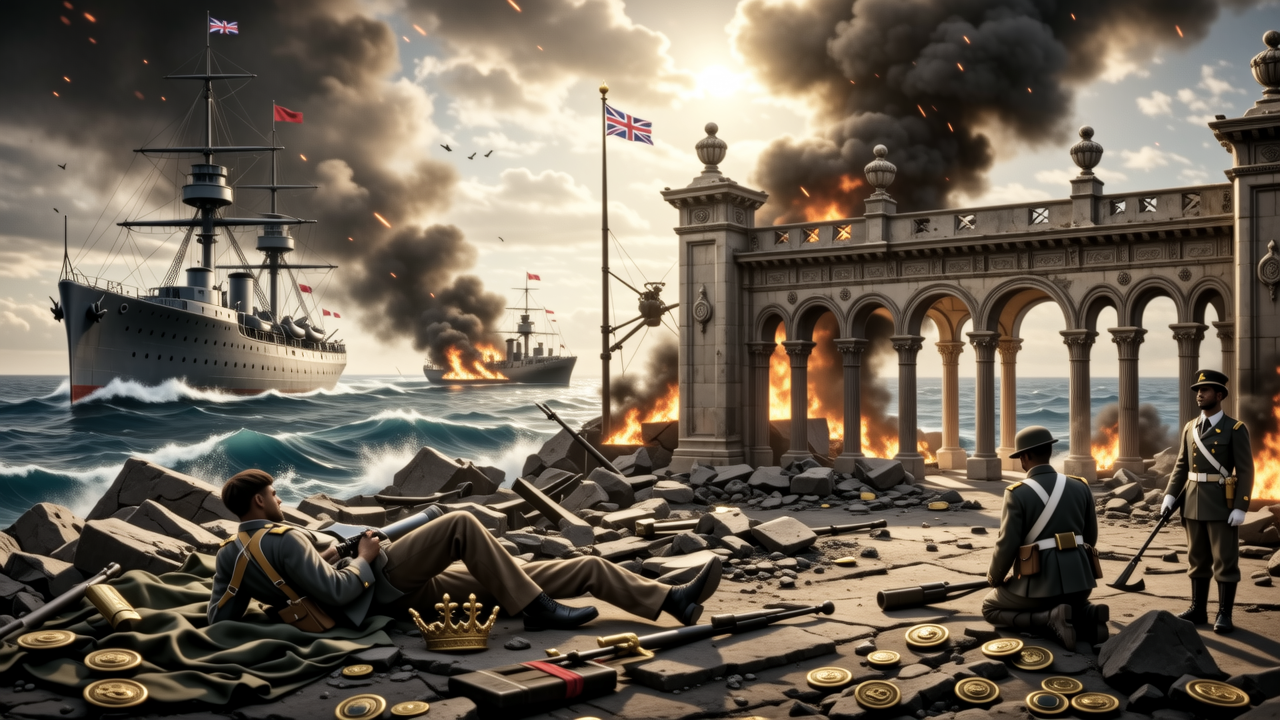
Have you ever imagined a war that ended before a cup of coffee could be served? On August 27, 1896, the world witnessed the shortest conflict in history: the Anglo-Zanzibar War. The battle between Britain and the Zanzibar Sultanate lasted between 38 to 45 minutes — faster than a movie. Here are 5 things you need to know about this extraordinary war.
1. Cause: Royal Succession Dispute
The death of Sultan Hamad bin Thuwaini on August 25, 1896, triggered a succession crisis. Khalid bin Barghash, the sultan's cousin, seized power without Britain's approval, which was the protecting power over Zanzibar. Britain wanted Hamoud bin Mohammed, a pro-British candidate, to be the sultan. When Khalid refused to step down, Britain issued an ultimatum: leave the palace by 9 a.m. on August 27. Khalid ignored it.
2. Uneven Military Preparations
Khalid's forces consisted of about 2,800 people — mostly civilians and armed servants — along with a small ship named
Glasgow. Meanwhile, Britain deployed five modern warships, 150 sailors, and 1,000 loyal Zanzibar soldiers. The old sultan's palace could not withstand the bombardment from British warships.
3. The Moment the War Began
At exactly 9 a.m., when the ultimatum expired, British warships began firing. Within less than 10 minutes, the sultan's palace was on fire. The
Glasgow tried to fight back but sank within 40 minutes. The Zanzibar flag was shot down, marking surrender. The battle stopped as soon as the flag fell. Casualties: approximately 500 people on the Zanzibar side, while Britain suffered only one injury.
4. After the War: Punishment and Recognition
Khalid bin Barghash fled to Dar es Salaam (later captured by the British in 1916). Britain appointed the pro-British Sultan Hamoud. Zanzibar remained a protectorate until it gained independence in 1963. This brief war is rarely mentioned, but it serves as an example of how conflicts can end quickly when there is an imbalance of power.
5. World Record and Legacy
The Anglo-Zanzibar War is recognized by the
Guinness World Records as the shortest war in history. Although there have been other short battles such as the Pearl Harbor attack (less than 2 hours) or the Six-Day War (1967), none have surpassed this 38-minute duration. However, behind the record, the tragedy of 500 deaths serves as a reminder that wars are never truly small — they just end quickly.
This war teaches us that in diplomatic affairs, swift action and courage can prevent greater bloodshed. Or conversely, it also reminds us how easily lives can be lost due to decisions made within a few minutes. Whatever the case, history still records that on the morning of August 27, 1896, the world witnessed the shortest war ever.
---
Reference: World War II — Wikipedia
The Shortest War in History: Just 38 Minutes and Done. The Anglo-Zanzibar War on August 27, 1896, lasted only 38 to 45 minutes, making it the shortest conflict in modern history. Discover interesting facts behind this brief war.. Have you ever imagined a war that ended before a cup of coffee could be served? On August 27, 1896, the world witnessed the shortest conflict in history: the Anglo-Zanzibar War. The battle between Britain and the Zanzibar Sultanate lasted between 38 to 45 minutes — faster than a movie. Here are 5 things you need to know about this extraordinary war.
1. Cause: Royal Succession Dispute
The death of Sultan Hamad bin Thuwaini on August 25, 1896, triggered a succession crisis. Khalid bin Barghash, the sultan's cousin, seized power without Britain's approval, which was the protecting power over Zanzibar. Britain wanted Hamoud bin Mohammed, a pro-British candidate, to be the sultan. When Khalid refused to step down, Britain issued an ultimatum: leave the palace by 9 a.m. on August 27. Khalid ignored it.
2. Uneven Military Preparations
Khalid's forces consisted of about 2,800 people — mostly civilians and armed servants — along with a small ship named Glasgow . Meanwhile, Britain deployed five modern warships, 150 sailors, and 1,000 loyal Zanzibar soldiers. The old sultan's palace could not withstand the bombardment from British warships.
3. The Moment the War Began
At exactly 9 a.m., when the ultimatum expired, British warships began firing. Within less than 10 minutes, the sultan's palace was on fire. The Glasgow tried to fight back but sank within 40 minutes. The Zanzibar flag was shot down, marking surrender. The battle stopped as soon as the flag fell. Casualties: approximately 500 people on the Zanzibar side, while Britain suffered only one injury.
4. After the War: Punishment and Recognition
Khalid bin Barghash fled to Dar es Salaam later captured by the British in 1916 . Britain appointed the pro-British Sultan Hamoud. Zanzibar remained a protectorate until it gained independence in 1963. This brief war is rarely mentioned, but it serves as an example of how conflicts can end quickly when there is an imbalance of power.
5. World Record and Legacy
The Anglo-Zanzibar War is recognized by the Guinness World Records as the shortest war in history. Although there have been other short battles such as the Pearl Harbor attack less than 2 hours or the Six-Day War 1967 , none have surpassed this 38-minute duration. However, behind the record, the tragedy of 500 deaths serves as a reminder that wars are never truly small — they just end quickly.
This war teaches us that in diplomatic affairs, swift action and courage can prevent greater bloodshed. Or conversely, it also reminds us how easily lives can be lost due to decisions made within a few minutes. Whatever the case, history still records that on the morning of August 27, 1896, the world witnessed the shortest war ever.
---
Reference: World War II — Wikipedia https://ms.wikipedia.org/wiki/Perang Dunia Kedua